
 English
 中文简体
中文简体 русский
Industry News


Kitchen Cleaning Wipes are commonly used on glass surfaces such as kitchen windows, oven doors, cabinet glass panels, and glass tabletops. Their performance largely depends on the balance between cleaning agents and moisture content. Most wipes are formulated to lift light grease, fingerprints, and water spots without requiring additional cleaners.
On standard kitchen glass, these wipes can effectively remove daily buildup from cooking vapors and hand contact. However, heavily baked-on grease or hardened residue may still require targeted scrubbing or a specialized glass cleaner.
One concern when using Kitchen Cleaning Wipes on glass is streaking. This usually occurs when excess solution is left behind or when the wipe contains conditioning agents designed for multi-surface use. Allowing the surface to air-dry fully or buffing lightly with a dry cloth can help achieve a clearer finish.
Ceramic surfaces in kitchens include tiles, backsplashes, ceramic cooktops, and decorative ceramics. Kitchen Cleaning Wipes generally perform well here due to the non-porous nature of glazed ceramic, allowing dirt and grease to be lifted rather than absorbed.
For routine cleaning, wipes can remove splashes, food stains, and surface dust efficiently. They are especially useful for quick maintenance between deep cleaning sessions.
While wipes clean smooth ceramic effectively, grout lines and textured ceramic surfaces can be more challenging. The wipe material may not reach deep into pores, limiting its ability to remove embedded stains or discoloration.
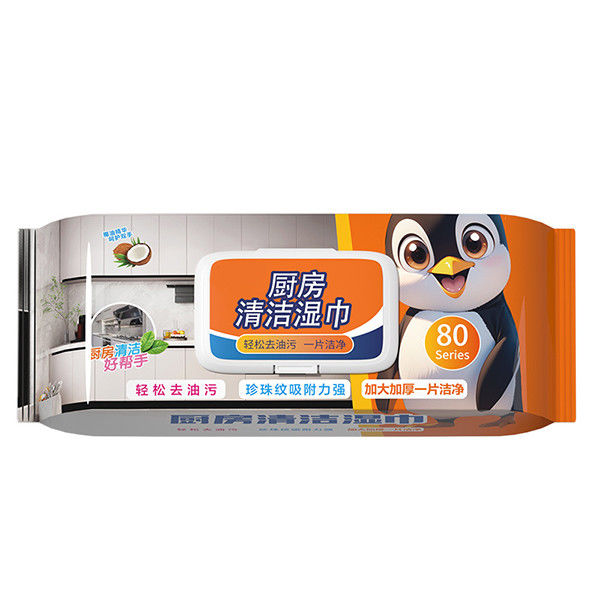
Kitchen Cleaning Wipes are designed for convenience, but residue can vary by formulation. On both glass and ceramic, low-residue wipes reduce the need for rinsing and help maintain surface appearance over time.
| Surface Type | Typical Performance | Rinsing Needed |
| Clear Glass | Removes fingerprints and light grease | Rarely |
| Glazed Ceramic | Effective for daily spills and stains | Not usually |
To maximize performance on glass and ceramic, Kitchen Cleaning Wipes should be used with attention to surface condition and wipe saturation. Using a fresh wipe for final passes helps reduce streaks and residue.

Add : No. 88,Pingzhang Road,Linhang Industrial Region,Deqing county 313219, Zhejiang, China
Copyright © Zhejiang Huachen Nonwovens Co., Ltd. All Rights Reserved.
Wholesale Spunbond Nonwoven Fabric Manufacturers

The information provided on this website is intended for use only in countries and jurisdictions outside of the People's Republic of China.